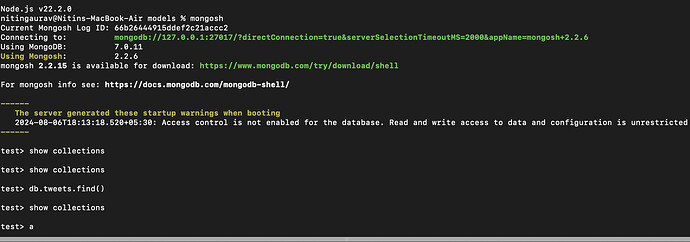
“Hey Fabio, thank you for welcoming me. The code below is the main app code that I’m trying to build. I have created the necessary EJS and JS files accordingly. Can you help me figure out how to check the database? I tried troubleshooting using Mongo Atlas documentation, but I’m unable to undo the action, as you can see in the screenshot below. The screenshot that is in the prior question shows the message ‘access control is not enabled for the database,’ and I think that’s the problem.
I’ve already started with MongoDB University courses.”
const express = require('express');
const path = require('path');
const mongoose = require('mongoose');
const ejsMate = require('ejs-mate');
// const { campgroundSchema, reviewSchema } = require('./schemas.js');
const catchAsync = require('./utils/catchAsync');
const ExpressError = require('./utils/ExpressError');
const methodOverride = require('method-override');
const Campground = require('./models/campground');
const Review = require('./models/review');

mongoose.connect('mongodb://localhost:27017/yelp-camp', {
    // useNewUrlParser: true,
    // useCreateIndex: true,
    // useUnifiedTopology: true
});

const db = mongoose.connection;
db.on("error", console.error.bind(console, "connection error:"));
db.once("open", () => {
    console.log("Database connected");
});

const app = express();

app.engine('ejs', ejsMate)
app.set('view engine', 'ejs');
app.set('views', path.join(__dirname, 'views'))

app.use(express.urlencoded({ extended: true }));
app.use(methodOverride('_method'));

const validateCampground = (req, res, next) => {
    const { error } = campgroundSchema.validate(req.body);
    if (error) {
        const msg = error.details.map(el => el.message).join(',')
        throw new ExpressError(msg, 400)
    } else {
        next();
    }
}
const validateReview = (req, res, next) => {
    const { error } = reviewSchema.validate(req.body);
    if (error) {
        const msg = error.details.map(el => el.message).join(',')
        throw new ExpressError(msg, 400)
    } else {
        next();
    }
}

app.get('/', (req, res) => {
    res.render('home')
});
app.get('/campgrounds', catchAsync(async (req, res) => {
    const campgrounds = await Campground.find({});
    res.render('campgrounds/index', { campgrounds })
}));

app.get('/campgrounds/new', (req, res) => {
    res.render('campgrounds/new');
})


app.post('/campgrounds', validateCampground, catchAsync(async (req, res, next) => {
    // if (!req.body.campground) throw new ExpressError('Invalid Campground Data', 400);
    const campground = new Campground(req.body.campground);
    await campground.save();
    res.redirect(`/campgrounds/${campground._id}`)
}))

app.get('/campgrounds/:id', catchAsync(async (req, res,) => {
    const campground = await Campground.findById(req.params.id).populate('reviews');
    res.render('campgrounds/show', { campground });
}));

app.get('/campgrounds/:id/edit', catchAsync(async (req, res) => {
    const campground = await Campground.findById(req.params.id)
    res.render('campgrounds/edit', { campground });
}))

app.put('/campgrounds/:id', validateCampground, catchAsync(async (req, res) => {
    const { id } = req.params;
    const campground = await Campground.findByIdAndUpdate(id, { ...req.body.campground });
    res.redirect(`/campgrounds/${campground._id}`)
}));

app.delete('/campgrounds/:id', catchAsync(async (req, res) => {
    const { id } = req.params;
    await Campground.findByIdAndDelete(id);
    res.redirect('/campgrounds');
}));

app.post('/campgrounds/:id/reviews', validateReview, catchAsync(async (req, res) => {
    const campground = await Campground.findById(req.params.id);
    const review = new Review(req.body.review);
    campground.reviews.push(review);
    await review.save();
    await campground.save();
    res.redirect(`/campgrounds/${campground._id}`);
}))

app.delete('/campgrounds/:id/reviews/:reviewId', catchAsync(async (req, res) => {
    const { id, reviewId } = req.params;
    await Campground.findByIdAndUpdate(id, { $pull: { reviews: reviewId } });
    await Review.findByIdAndDelete(reviewId);
    res.redirect(`/campgrounds/${id}`);
}))

app.all('*', (req, res, next) => {
    next(new ExpressError('Page Not Found', 404))
})

app.use((err, req, res, next) => {
    const { statusCode = 500 } = err;
    if (!err.message) err.message = 'Oh No, Something Went Wrong!'
    res.status(statusCode).render('error', { err })
})

app.listen(3000, () => {
    console.log('Serving on port 3000')
})