Enable faster product onboarding with MongoDB and Together AI to deliver generative AI-powered solutions for writing multilingual product descriptions.
Industries: Retail
Products: MongoDB Atlas, Document Model, MongoDB Node.js Driver
Partners: Together AI
Solution Overview
In this solution, you learn how to build a generative AI-powered architecture that processes images using Together AI vision models, generating accurate and compelling descriptions of an image. MongoDB Atlas serves as the operational data layer, leveraging its flexible data model to scale as you add new descriptions and ensuring efficient data management and scalability.
This solution proves particularly valuable in the retail industry. The process of onboarding a new product to a retailer's catalog can be time-consuming, especially when you craft product descriptions in multiple languages and for different demographics. This solution helps streamline that workflow by automating the initial content creation through generative AI, providing retailers with a solid foundation for each product description, ultimately speeding up the time to market and improving consistency across their catalog UX writing.
The Importance of a Good Description
Business Dasher states that "70% of people leave a product page when the product description is poor or incomplete."
Product descriptions play a crucial role in the customer's journey. Shoppers rely on them to make buying decisions. When descriptions are weak or missing, businesses risk losing potential revenue and leaving customers frustrated.
A great description enhances user engagement and satisfaction as "87% of online shoppers consider product descriptions to be crucial when making a buying decision," according to Business Dasher. On the other hand, inaccurate descriptions can result in revenue loss and trust decline with your customer base as "40% of consumers have returned online purchases due to poor product content," according to AX Semantics.
Traditional Product Description Challenges
Writing high-quality descriptions involves numerous details and careful considerations. Some challenges include:
Crafting compelling descriptions: A well-written product description addresses their target's needs and desires while maintaining a consistent tone that aligns with the business's UX writing strategy and brand identity.
SEO optimization: Creating SEO-optimized product descriptions to drive organic traffic and improve search engine rankings.
Multilingual complexity: Increased complexity for retailers with multilingual portals or multiple operating geographies.
Content approval delays: Even after you write a description, often a writing approval process still needs to happen, delaying the time to market.
Reference Architectures
This architecture has three key components:
MongoDB Atlas: A general-purpose data platform that manages your data in the cloud. The MongoDB document model allows products to scale easily by adding more descriptions (i.e. for translations in multiple languages) without introducing complexity.
Object Storage: An effective system for product image file storage and retrieval. You can build this with Google Cloud storage, Azure Blob Storage or AWS S3.
Together AI: Offers various generative AI services, making it easy to run or fine-tune leading open source models with only a few lines of code. This solution uses their available vision LLMs to generate the product descriptions.
The following diagram displays this solution's architecture:
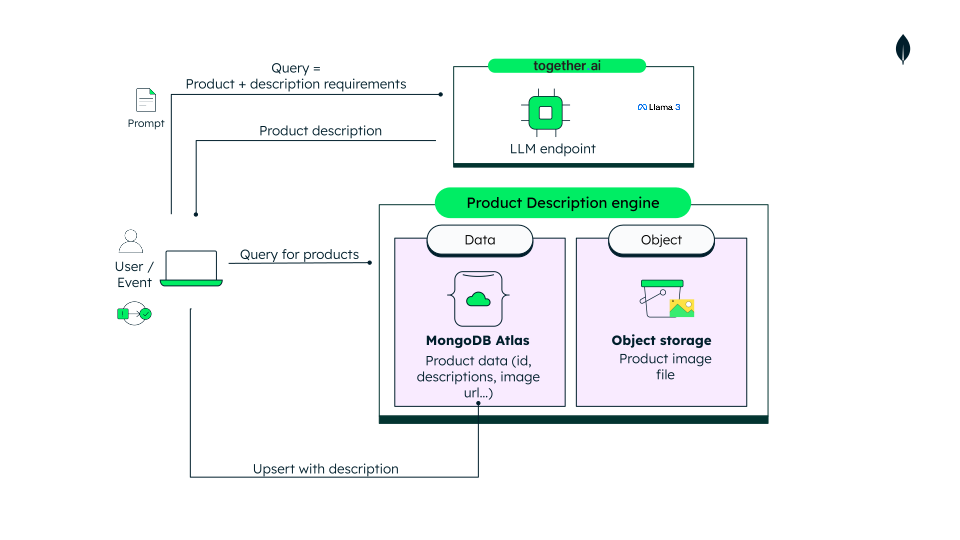
Figure 1. Product description generative AI architecture
This architecture has the following data flow:
1. Product Ingestion
The solution starts on the left side of the diagram with the User/Event label. A laptop icon represents the Product Description Generator system. First, you receive a new product, which you add manually or in bulk through an automated event.
2. Request Description
You can then generate the descriptions by sending a query to Together AI's endpoint, utilizing their vision models that combine computer vision and natural language processing (NLP) to process and understand images alongside text. The request includes the image URL, the desired description length, the vision model utilized, and the languages for the description.
3. Generate Description
Together AI uses its Llama3 vision models to scan the image, generate a description that matches the specified requirements, and return the product description to the application.
4. Store Description
Finally, you upsert the product along with its description inside the catalog on MongoDB, ensuring real-time availability across all connected systems.
To illustrate the scalability of this architecture, consider the diagram below. By integrating MongoDB Change Streams, it allows real-time updates on any application listening to the catalog. For example, the e-commerce portal, a social media platform, and any other touchpoints.
The following diagram displays this solution's architecture with real-time integration:
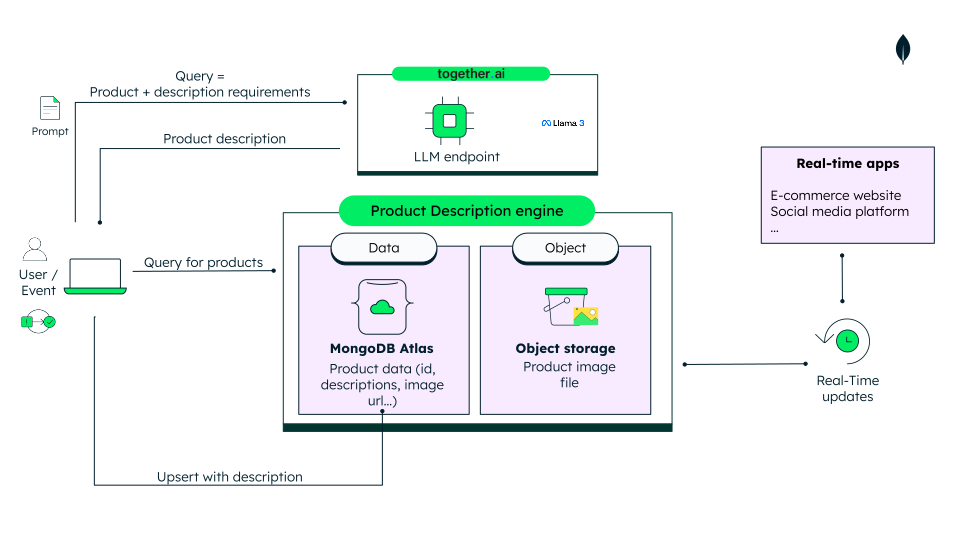
Figure 2. Product description generative AI architecture with real-time applications
Build the Solution
This solution uses this GitHub repository.
The repository's README describes the following procedure in more detail.
Replicate the demo database
Provision a cluster within your Atlas account and populate your demo
database using the provided data dump and a single mongorestore
command.
Create your Together AI account
Sign in to Together AI. Navigate to
your account and retrieve your user key, which you can find by going to
your Profile, then going to Settings and selecting API Keys. Save
this key, as you need it in your .env file.
Configure your application frontend
Obtain the demo code by cloning the GitHub repository to your local machine, configure the environment variables, and install the dependencies. Finally, run the app locally at http://localhost:3003.
Key Learnings
High-quality product descriptions drive business success: A well-crafted product description enhances user engagement, improves SEO rankings with increased views, and helps customers make more informed purchase decisions.
Leverage MongoDB and Together AI to automate product descriptions: By combining MongoDB's flexible and scalable database with Together AI's available vision models, retailers can automate real-time product description generation that aligns with their business needs.
Modern architectures speed up time to market: Streamlining the product onboarding process with AI and automation reduces manual effort and speeds up approvals. Using generative AI for product descriptions maintains consistent UX and tone, enabling quick scalability for expanding product catalogs.
Authors
Angie Guemes, MongoDB
Prashant Juttukonda, MongoDB